Description
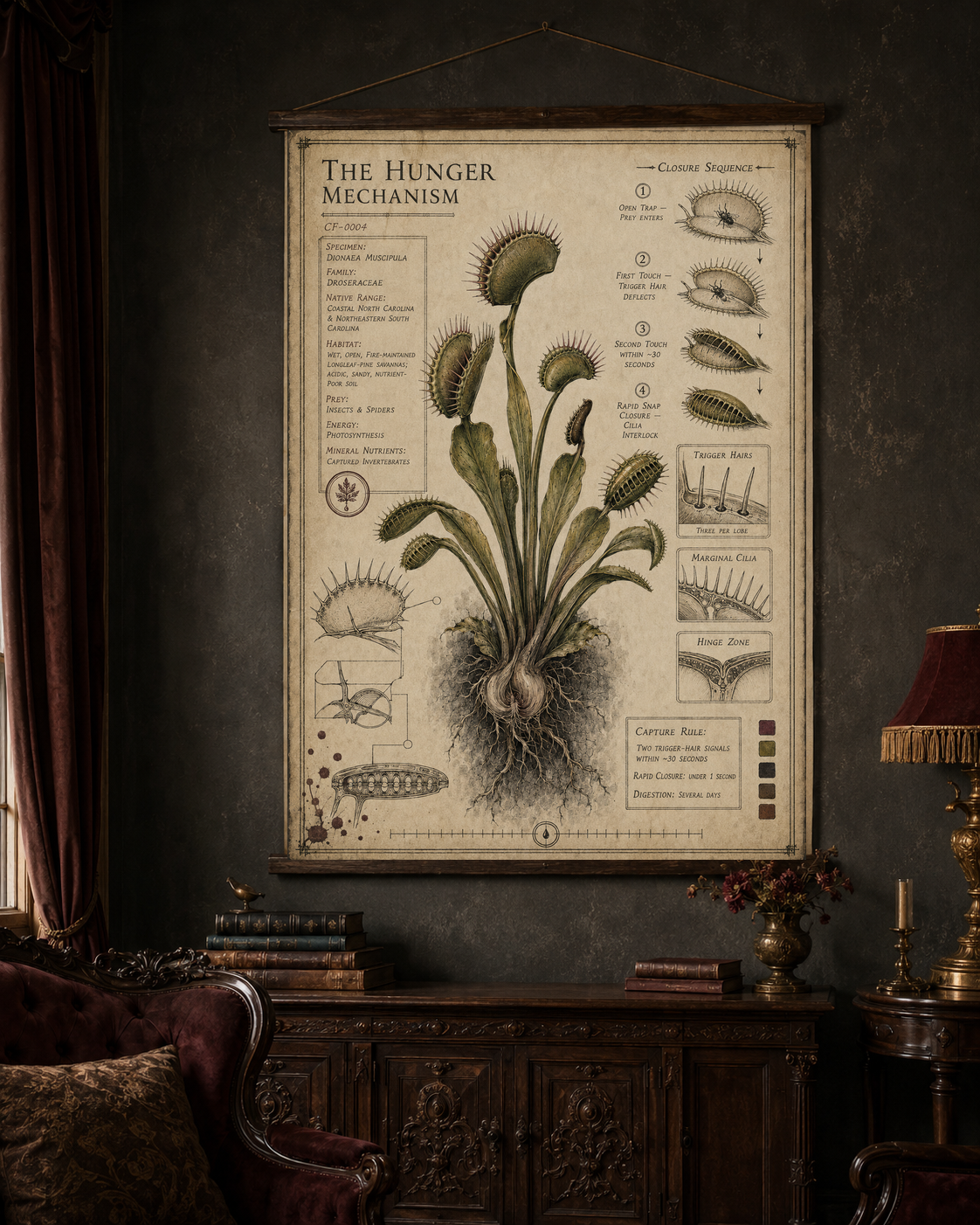
THE HUNGER MECHANISM
A museum-style botanical study of Dionaea muscipula—the Venus flytrap—charting its trigger hairs, marginal cilia, hinge zone, native habitat, and rapid closure mechanism. A field plate from the Corpseflowers carnivorous-plant archive.
Native to a small coastal range in North Carolina and northeastern South Carolina, the Venus flytrap relies on photosynthesis for energy and captures invertebrates for mineral nutrients. Two touches to its trigger hairs within roughly 20–30 seconds initiate rapid closure; digestion takes several days.
FORMAT
• 26 × 36 in portrait wall hanging
• High-resolution archival-style botanical artwork
• Polyester textile with wooden hanging bars and hanging twine
• Made to order
Colors may vary slightly between screens and the finished textile. Created for indoor display.